SHREE BIJJO BHUTA DRAMA: WAITING, MIGRATION, AND ONE’S OWN STORY-PRAVEEN PUMA
1. INTRODUCTION
SHREE BIJJO BHUT drama is being staged at Mandala Theatre, Thapagaun from September 22 to October 11, 2026 as part of its current theatrical performance. The production is closely connected to the geography, language, memory, labour, and cultural practices of Sudurpashchim. The direct relationship of the creative team and several performers with the region gives the production an experiential foundation through which local knowledge enters the stage as theatrical practice.
The production does more than present a story from Sudurpashchim to a Kathmandu audience. It transforms local language, bodies, music, costume, objects, labour, ritual, Deuda, Gaura, and landscape into theatrical materials. These elements construct a recognizable cultural world in which migration, absence, waiting, love, separation, and incomplete reunion become interconnected dramatic concerns. The Dharmashala functions as a central spatial structure, while waiting becomes both an emotional condition and a way of organizing theatrical time.
The central significance of the production therefore lies not simply in regional representation but in the transformation of lived cultural experience into theatrical language. Through this transformation, the performance makes visible the social and emotional consequences of migration and prolonged absence. It also raises questions concerning spatial clarity, women’s agency, and the continuing dramatic function of the Shrre Bijjo Bhuta ritual.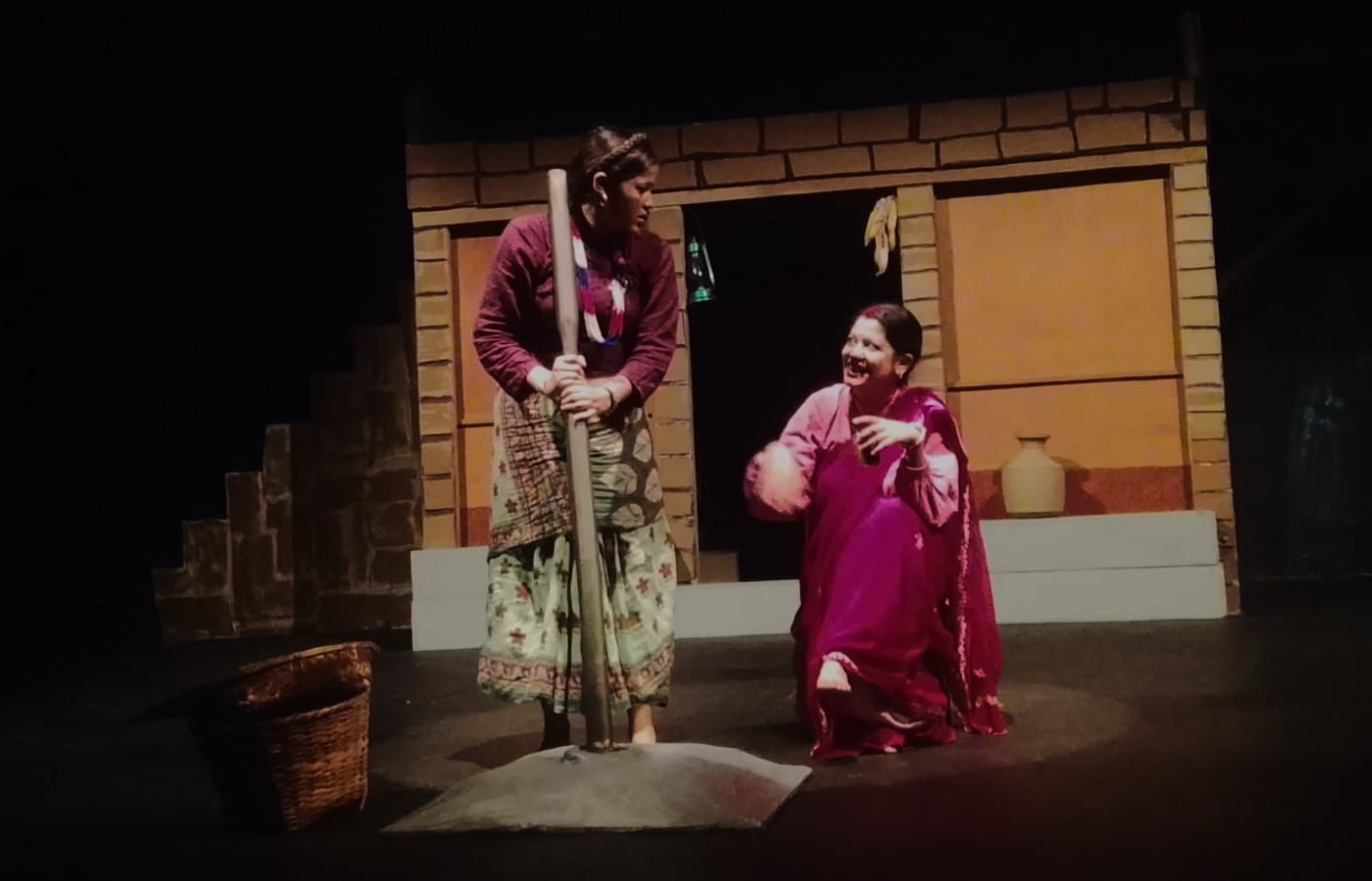 Picture : PRAVEEN PUMA on Sept 27, 20026
2. PRODUCTION CONTEXT AND REGIONAL STORYTELLING
According to producer of this drama SHREE BIJJO BHUTA Somnath Khanal, one of Mandala Drama School’s concerns since its establishment has been to create an environment in which artists from different parts of Nepal can bring stories from their own places to the stage. In relation to Sudurpashchim, this approach creates theatrical space for a regional experience that has had comparatively limited visibility within Kathmandu’s contemporary theatre environment.
Diwas Nath is a Mandala trainee and playwright from Sudurpashchim. Aakash Nepali belongs to the first batch of Mandala Drama School and directs a story connected to his own region. The regional backgrounds and community connections of several performers further ground the production in lived experience. Buddhi Tamang brings artists from different generations into the same creative process.
Khanal describes the production as an attempt to connect serious social concerns with humour and entertainment. This relationship is evident in performance. Moments of laughter coexist with situations of migration, separation, poverty, and emotional uncertainty. Humour consequently does not simply interrupt the seriousness of the narrative. It provides another theatrical means of approaching difficult social realities.
3. STORY, PLACE, AND LIVED EXPERIENCE
Diwas Nath’s writing draws substantially on everyday life in Sudurpashchim. Village language, relationships, labour, folk practices, memory, and ordinary struggles enter the dramatic structure. The rhythm of the regional dialect gives the dialogue a distinctive pace and emotional texture. Short exchanges frequently carry humour, affection, tension, and pain without requiring extensive explanation.
The play also connects these local experiences with broader concerns such as migration, love, poverty, family separation, faith, and the desire to return. The particularity of the regional setting therefore does not isolate the narrative. Instead, it provides the social and material conditions through which wider human experiences become visible.
The play does not present reunion as a simple restoration of the past. Years of absence have altered relationships and expectations. Physical return cannot erase the consequences of time. The tension between return and irreversibility becomes an important dramatic condition.
This relationship between local experience and wider human concerns gives the production its larger theatrical significance. The regional story remains specific while opening questions about migration, family, memory, and belonging.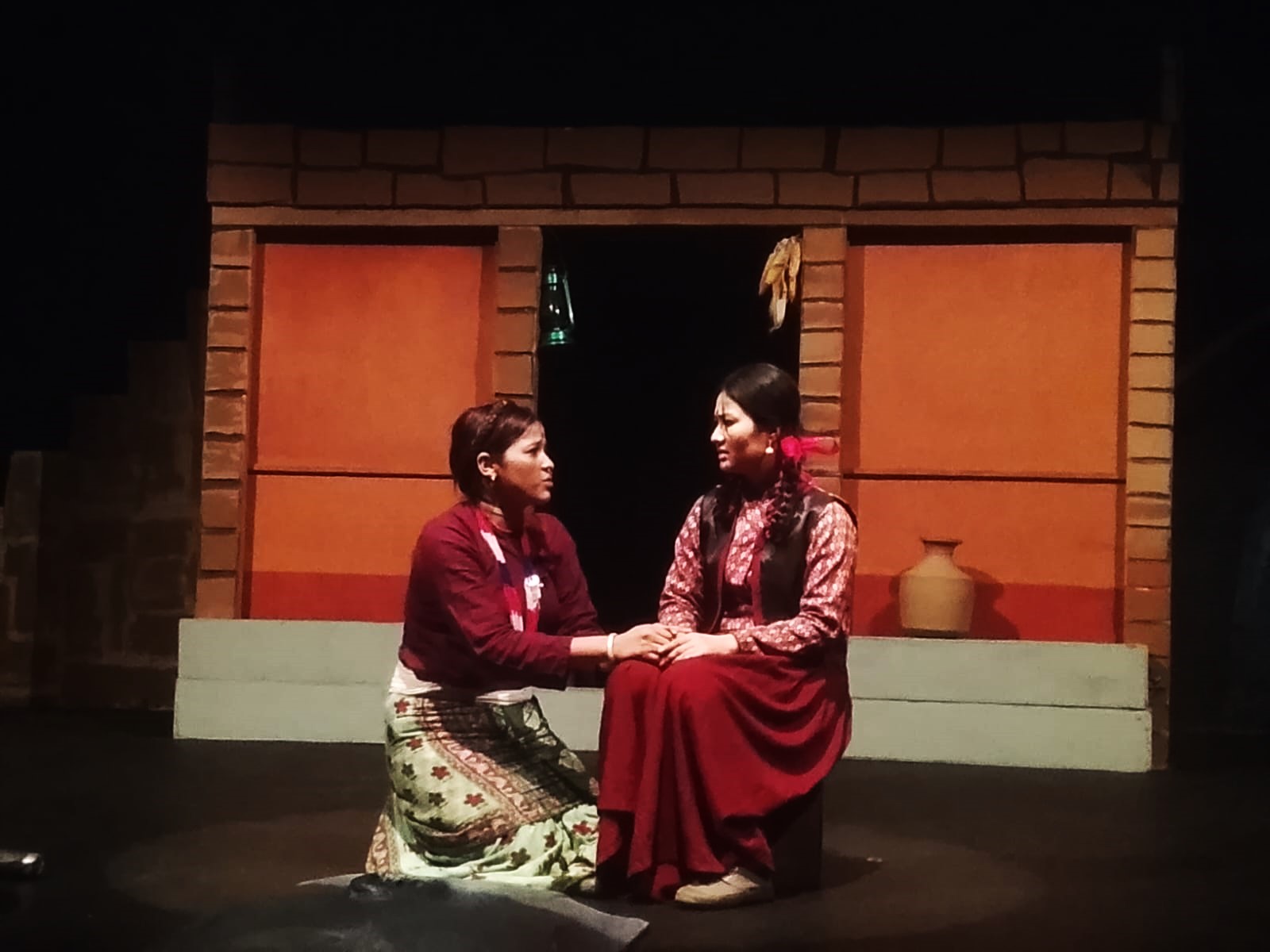 Picture : PRAVEEN PUMA on Sept 27, 20026
4. TELLING ONE’S OWN GEOGRAPHY
The direction of Buddhi Tamang and Aakash Nepali presents Sudurpashchim through artists who maintain direct relationships with the region. Aakash Nepali’s connection with Doti and Sudurpashchim gives the production an experiential grounding that extends beyond geographical representation.
Language, bodily behaviour, music, objects, costume, and labour establish a sense of place. When these elements are carried by performers connected to the cultural world being represented, the region becomes more than a subject of narration. It becomes part of the performance process itself.
Some scenes, however, would benefit from more precise blocking and transitions. A more selective distribution of movement and visual attention could allow important dramatic moments to receive greater concentration. Such refinement would not diminish the cultural character of the production. It would strengthen its theatrical organization.
5. DRAMATURGICAL STRUCTURE
The absence of a husband who has gone to India and never returned leaves an elderly woman carrying household, labour, and family responsibilities. Migration therefore appears not simply as an individual journey but as a condition that reorganizes the lives of those who remain.
The narrative connects migration with livelihood. References to goat production, shilajit, radi-pakhi trade, animal husbandry, domestic labour, and natural resources establish a material economic environment. The person who leaves carries family expectations and responsibilities, while those who remain live with the practical and emotional consequences of absence.
The collective environment surrounding the woman could, however, be developed further. More visible neighbours, shared labour, and community activity could connect her individual experience more strongly with the wider social consequences of migration.
The play consequently treats migration as more than physical movement between Nepal and India. It becomes a social process that changes relationships, responsibilities, expectations, and the meaning of return.
6. THEATRICAL GEOGRAPHY AND STAGE SPACE
The stage architecture, earth-based house, projected Himalayan landscape, objects, movement, and labour establish the environment of Sudurpashchim. The geography becomes particularly convincing when it is carried through the performers’ bodies. Cutting grass, walking, working with forest materials, herding goats and sheep, and performing domestic tasks make the landscape active rather than merely visible.
Place is therefore not only represented; it is performed. Walking patterns, posture, facial expression, collective movement, and physical labour allow the body to carry locality, memory, and social identity.
The dharmashala becomes especially important within this theatrical geography. It functions as a space of encounter, separation, memory, and waiting. It is not merely a scenic location. It becomes a dramaturgical space in which different histories temporarily meet.
From a performance-studies perspective, the geography of the play does not exist only in projected images or stage design. It is produced through the ways performers move, work, wait, interact, and occupy space. The body becomes a medium through which geographical knowledge is translated into theatrical form.
Some scenes, however, would benefit from more precise blocking and transitions. A more selective distribution of movement and visual attention could allow important dramatic moments to receive greater concentration. Such refinement would not diminish the cultural character of the production. It would strengthen its theatrical form.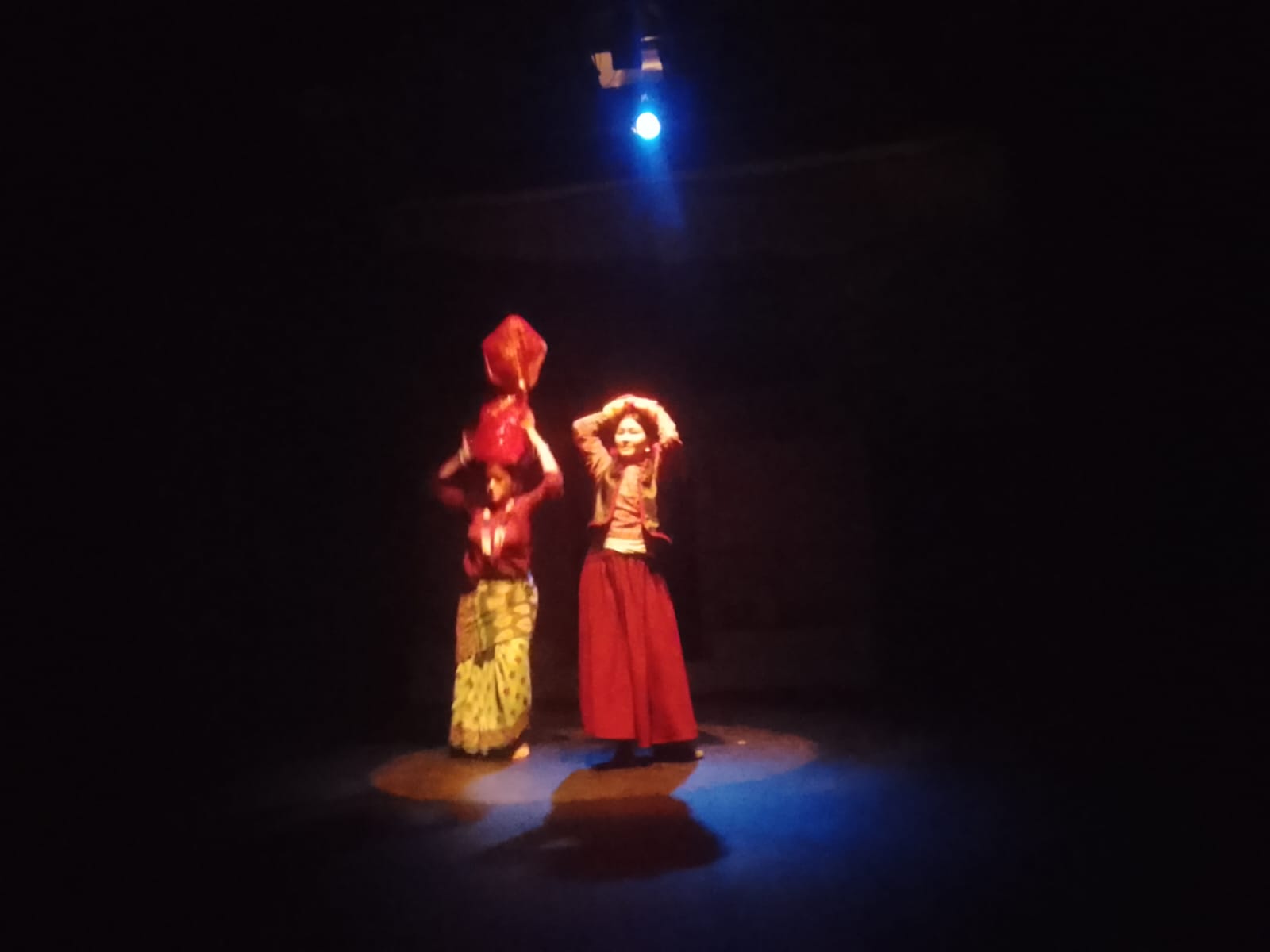 Picture : PRAVEEN PUMA on Sept 27, 20026
7. COSTUME, PROPS, AND MATERIAL CULTURE
Mundri, tika, choli, gunyu, barki, kattu, boxes, and masks contribute to the regional visual identity of the production. Rope, sticks, doko, bundles of firewood, water pots, bidi, matches, water, and glasses bring the material world of everyday life onto the stage.
Their significance lies not simply in their visual appearance but in their theatrical use. Carrying a doko, pouring water, handling a stick, or working with rope turns an object into an action. These actions connect material culture with labour, memory, and social relationships.
The stage consequently does not merely reproduce the appearance of village life. It constructs a performative environment in which everyday activities become theatrical actions. Material culture becomes part of the vocabulary through which the production communicates locality.
This material dimension also supports the production’s treatment of labour. Objects are not isolated signs of rural identity. They participate in the physical activities through which village life is represented and performed.
8. RITUAL AND CULTURAL PERFORMANCE
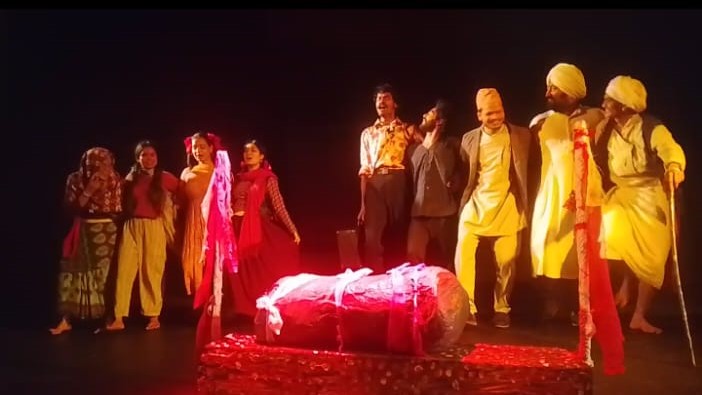
The opening of SHREE BIJJO BHUTA ritual performance establishes a cultural world associated with ancestors, protection, power, and continuity. At certain moments, however, several bodies occupy the same visual field, making the central ritual action difficult to follow. The issue is not a lack of performance energy but the distribution of visual attention.
A clearer relationship among the ritual centre, bodily movement, and surrounding performers could make the opening more focused.
More importantly, the SHREE BIJJO BHUTA ritual performance has the potential to perform a continuing dramatic function rather than serving primarily as an opening cultural marker. This becomes significant because the later narrative develops through separation, loss, failed love, and incompleteness.
A stronger dramaturgical relationship between the opening ritual and these later developments could deepen the production’s exploration of the relationship between ritual belief and lived experience.
Gaura and Deuda similarly operate beyond simple cultural display. They introduce rhythm, community, memory, and social interaction into the performance. Their presence connects individual and collective bodies and gives cultural practice a physical and temporal dimension.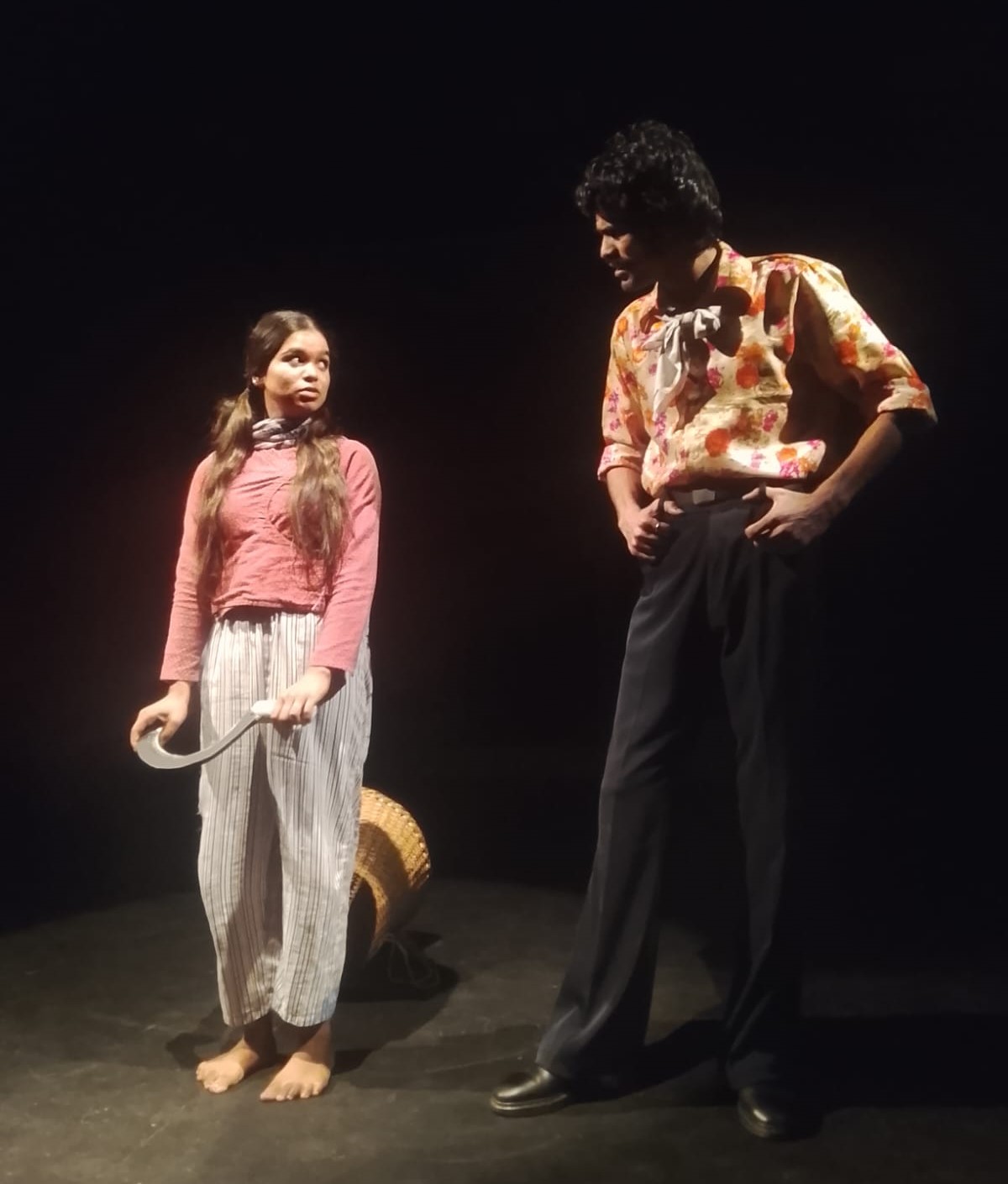 Picture : PRAVEEN PUMA on Sept 27, 20026
9. PHYSICAL LANGUAGE AND EMBODIED REGIONALITY
Gaura, Deuda, local walking patterns, postures, facial expressions, and everyday physical actions create a regional physical language. These elements allow performers’ bodies to carry cultural memory.
The importance of this physical language lies in its ability to transform local knowledge into embodied performance. A walking pattern, working gesture, posture, or collective movement can communicate social experience without verbal explanation.
The production therefore constructs regional identity through the body as much as through dialogue. Cultural knowledge becomes visible through movement, rhythm, labour, and interaction.
This embodied rationality is particularly important because it prevents Sudurpashchim from functioning merely as a backdrop. The region becomes active within the performance through the bodies that inhabit, remember, and enact it.
10. WAITING AS PERFORMED TIME
The dharmashala becomes a central site of waiting. The returning lahure from India and the woman searching for her father come close to one another within this space, yet complete recognition or reunion does not occur.
This structure transforms waiting into performed time. Years of absence have changed people, relationships, and expectations. Returning therefore does not mean simply returning to the past. The returning body and the life that continued during its absence carry different histories.
Waiting is consequently not passive. It shapes the characters’ present lives and their relationships with memory and expectation. The temporality of the production emerges not only through chronological events but through the embodied experience of absence.
Waiting also becomes a condition shared by different characters. It connects migration, family separation, love, memory, and the expectation of return without reducing these experiences to a single emotional state.
11. LOVE, CONCEALMENT, AND THE SPECTATOR’S GAZE
At the dharmashala, the lahure and his lover occupy the same platform while remaining visually separated. The woman watches him from behind. The audience therefore recognises their proximity even though the characters remain separated. This produces a quiet form of theatrical irony.
At the same time, the blocking places the woman’s face and emotional response at some distance from the audience. The concealment has a dramatic purpose, but greater visibility of her emotional presence could strengthen the scene. Her hesitation, affection, and pain could become more directly available to the spectator without eliminating the dramatic function of concealment.
This is therefore not merely a question of blocking. It concerns the distribution of visual attention. The stage determines whose emotional experience becomes most immediately visible. Greater visual emphasis on the woman’s perspective could strengthen the relational tension already present in the scene.
The scene demonstrates how spatial arrangement can become a dramaturgical device. Physical proximity does not necessarily produce emotional reunion. Instead, the stage makes separation visible within proximity.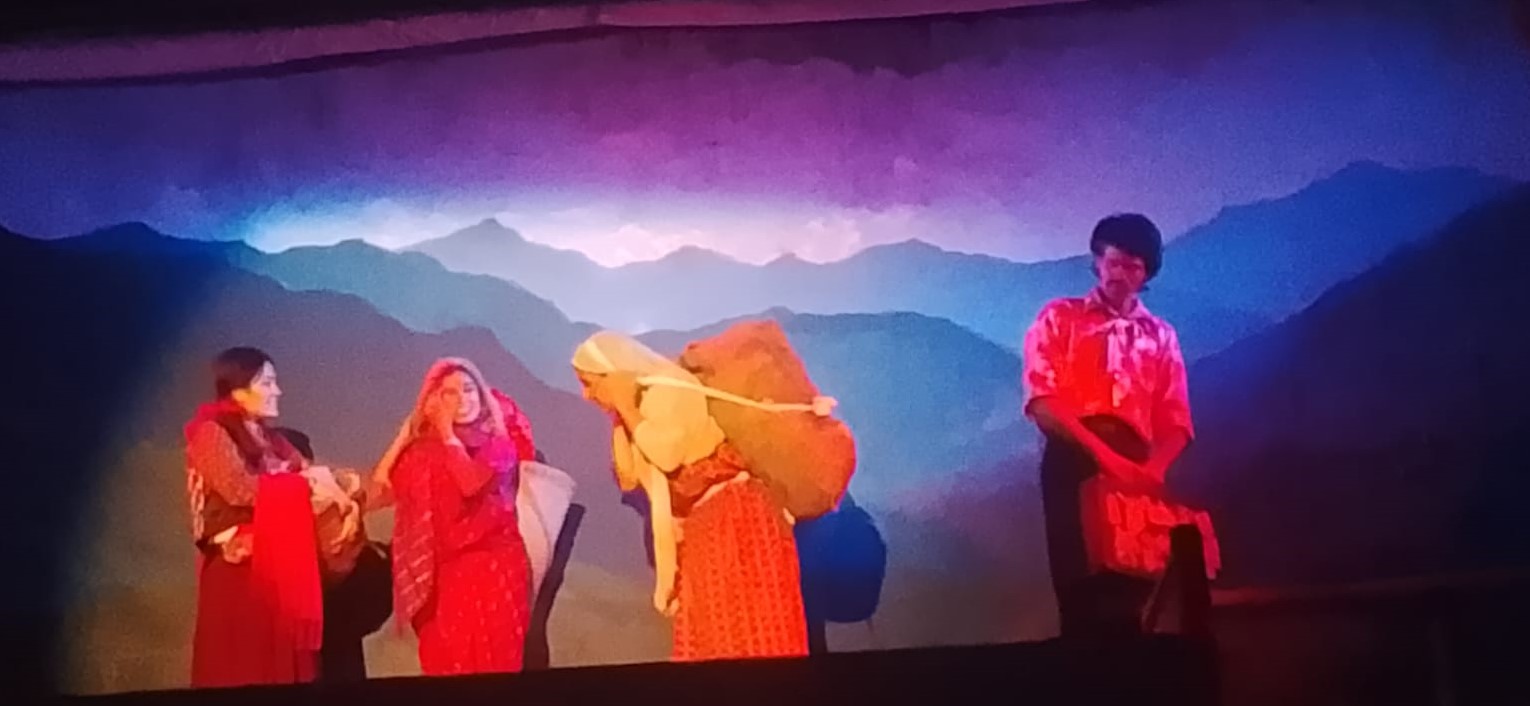
12. LOVE, IDENTITY, AND INCOMPLETE REUNION
The play develops love through separation, identity, memory, and uncertainty. Even when characters come physically close, their relationship is not restored according to the conventions of a conventional reunion narrative. Years of absence have altered their identities and expectations.
Reunion therefore functions less as resolution than as a moment in which the distance between past and present becomes visible. Physical return cannot recover lost time.
The woman’s final destination remains open. This openness allows the audience to continue considering her circumstances beyond the performance. At the same time, a more defined final physical, visual, sonic, or spatial gesture could give this uncertainty a stronger theatrical form. An open ending does not require an indistinct stage action.
The unresolved ending consequently extends the production’s concern with migration. Return is possible as physical movement, but restoration of the past remains uncertain.
13. WOMEN’S AGENCY
The woman’s separation, search, and emotional loss constitute important social dimensions of the narrative. At the same time, the production raises a further question concerning the representation of women: how can suffering be accompanied by agency?
A waiting woman can also be a woman who makes decisions. A woman who searches can determine her own destination, negotiate circumstances, and make choices about her future.
The woman’s search already gives her movement within the narrative. Extending this agency more explicitly into the final stage of her journey could make her story more than a consequence of another person’s absence. It could become an expression of her own desire and decision-making.
This would broaden the treatment of migration by recognising women not only as those who experience absence but also as subjects who act within its consequences. Picture : PRAVEEN PUMA on Sept 27, 20026
14. FOLK BELIEF AND LIVED REALITY
The SHREE BIJJO BHUTA and SHREE BIJJO ritual performance carries meanings associated with ancestors, protection, power, hope, and cultural continuity. At the same time, the same cultural world contains separation, failed love, searching, and incompleteness.
The performance does not establish a simple opposition between local belief and social suffering. Instead, the coexistence of ritual belief and difficult lived circumstances opens a more complex relationship among faith, continuity, hope, and uncertainty.
The central question is how fully the philosophical force of the opening ritual operates within the later dramatic structure. A stronger relationship between ritual belief and the characters’ experiences of separation, loss, and decision could deepen the connection between cultural belief and lived reality.
The ritual could therefore function not only as evidence of regional identity but also as a recurring dramatic principle through which the later events acquire additional meaning.
15. EMOTION, RHYTHM, AND PHYSICAL PRESENCE
The acting is not limited to spoken dialogue. Voice, pronunciation, body, gesture, facial expression, movement, stillness, rhythm, and interaction contribute to character construction and the production of social atmosphere. Individual roles consequently exist within a larger network of bodies, voices, objects, songs, labour, and space.
ADITYA MISHRA AS HARI uses Hindi-influenced pronunciation, cadence, and dialogue rhythm to mark Hari’s association with Bombay and his migrant experience. His vocal pattern creates geographical distance within the character. The performance gains theatrical meaning because voice becomes a marker of displacement, memory, and a life shaped by migration displacement.
SUSMITA KUNWAR AS GAURI communicates experience through tears, facial expression, stillness, and controlled vocal delivery. Rather than explaining Gauri’s waiting through excessive dialogue, she allows duration and bodily restraint to carry emotion. Her performance makes waiting visible as an embodied condition shaped by absence, memory, affection, and uncertainty.
BHUPI LUHAR AS THE LAHURE AND ELDER DHAMI differentiates the two characters through gesture, facial expression, movement, and reaction. Some early expressions appear comparatively deliberate, while later responses become more fluid. The contrast demonstrates an evolving physical vocabulary that supports character distinction and strengthens interaction within the ensemble scenes effectively.
UMESH SUNAM AS THE GOAT SELLER AND DEUDA PERFORMER shifts between everyday economic activity and collective cultural performance. His acting connects labour with communal expression, allowing the body to move between practical and performative registers. This transition strengthens the production’s representation of village life as both material and cultural experience.
BARSHA BHANDARI AS THE SINGLE MOTHER, ELDERLY WOMAN, AND CHORUS moves between individual characterization and collective presence. Her performance connects personal experience with the wider social environment. Through shifts in physical presence and interaction, she contributes to the production’s representation of community while maintaining distinctions among different theatrical functions.
AGNI SHREE BISHWAKARMA AS THE GOAT AND LOVER relies strongly on physical performance. Posture, bodily direction, pace, movement, and rhythm construct the goat as a theatrical sign while also supporting the human role. The performance demonstrates how transformation of the body can generate character without depending primarily on verbal characterization.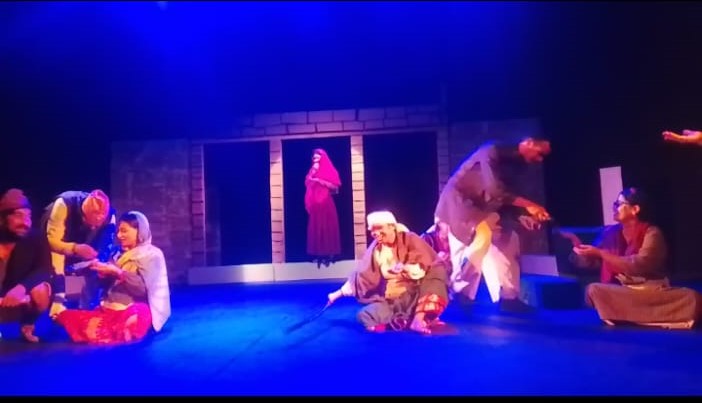
SAMRIDDHI NEPAL AS THE VILLAGE WOMAN contributes to the collective environment through participation in village activity and social interaction. Her performance does not depend on extended individual characterization. Instead, presence, response, and physical engagement help establish the social texture of village life and connect individual action with the surrounding community.
SNEHA JOSHI AS THE VILLAGE GIRL contributes everyday village behaviour and social interaction to the stage. Her performance operates through ordinary physical presence rather than display. This restrained approach helps establish the social environment and demonstrates how minor roles can contribute significantly to the construction of a believable community.
SUSHILA BISHWAKARMA, AS THE GRASS-CUTTING WOMAN AND DEUDA PERFORMER, connects physical labour with cultural performance. Her body moves between the repetitive actions of work and the rhythmic qualities of collective performance. This dual function makes labour visible as embodied knowledge while linking everyday activity with the wider cultural performance environment.
DIWAS NATH AS GANUWA constructs the character through relationships surrounding shilajit trade and the thieves. His performance is therefore relational rather than isolated. The character gains meaning through interaction, social position, and economic activity, allowing the acting to participate in the production’s wider representation of village networks, livelihood, and exchange.
CHIRAG PANERU AS THE SHILAJIT SELLER contributes to the economic and interpersonal network surrounding village life. The role gains significance through interaction with other characters rather than through extended individual development. His performance supports the production’s material context by connecting commerce, social relationships, and everyday livelihood within the theatrical world daily.
The goats acting as performers within the rural environment. Their movement, unpredictability, pace, and physical presence contribute to stage rhythm and atmosphere. They are not merely decorative elements. Their participation expands the material field and strengthens the sense that village life is constituted through human and nonhuman activity.
Overall, the acting is grounded in embodiment, relationality, rhythm, and cultural performance. Individual performers do not construct character in isolation. Meaning emerges through relationships among bodies, voices, objects, songs, labour, and space. Acting therefore functions as a collective embodied practice rather than simply a collection of individual character performances.
16. MUSIC AND AURAL GEOGRAPHY
The damaha performed by Saurav/Saurabh Chalise, the flute by Jeevan Rai, and Harina Nath’s live singing make music an active component of the production. Music does not merely accompany scenes from the background. It interacts with movement, dialogue, emotional transitions, and audience response.
Harka Saud’s songs and live singing extend the sense of community. The live rhythms of Deuda and Gaura bring performers’ bodies and musical structures into the same performance process.
Sudurpashchim is therefore not only seen but heard. Music makes geography audible and connects cultural memory with the temporal movement of the performance.
The aural dimension is particularly significant because it prevents the regional world from becoming merely visual. Sound participates directly in the construction of place, atmosphere, rhythm, and collective identity.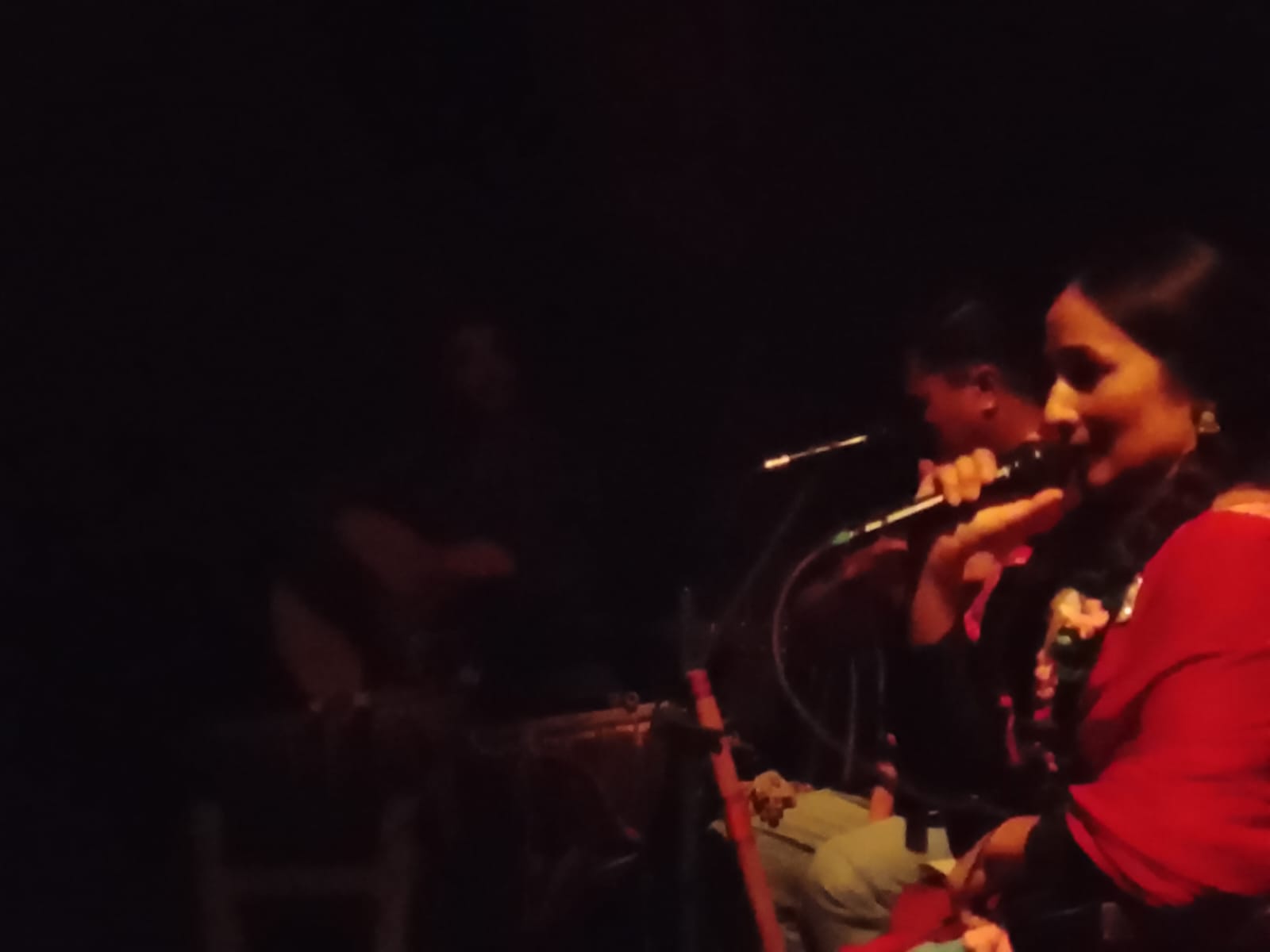 Picture : PRAVEEN PUMA on Sept 27, 20026
17. LIGHTING, PROJECTION, AND DRAMATURGICAL EDITING
The red, white blue and many more colour lighting contributes to the emotional atmosphere and visual organization of the production. In some scenes, however, lighting changes could be more closely coordinated with the rhythm of acting and emotional transitions.
Greater continuity among movement, sound, lighting, and stage transitions could strengthen the dramaturgical flow. More selective editing could also allow significant scenes to receive greater space and give the movement toward dramatic peaks greater concentration.
The projected landscape of Sudurpashchim and the use of smoke contribute to the atmosphere. Their theatrical effectiveness increases when they remain integrated with performers’ actions rather than functioning as independent visual effects.
Technical design therefore participates in the transformation of cultural material into theatrical experience. Lighting, projection, smoke, sound, movement, and acting work most effectively when they form a coordinated performance system.
18. COLLECTIVE THEATRICAL LABOUR
SHREE BIJJO BHUT drama is the result of collective theatrical labour. Produced by Somnatha Khanal, the script of Diwas Nath; the direction of Buddhi Tamang and Aakash Nepali; dramaturgical consultation by Anil Kurmi; stage and poster design by Sharad Bhandari; set construction by Shiva Pariyar, Ganesh P. Paudel, and the team; lighting design by Umesh Tamang; coordination by Balu Rai; songs by Harka Saud; and live music by Saurav/Saurabh Chalise, Jeevan Rai, and Harinath all contribute to the production.
The acting of Aditya Mishra, Susmita Kunwar, Bhupi Luhar, Umesh Sunam, Agni Shree Bishwakarma, Samriddhi Nepal, Sneha Joshi, Sushila Bishwakarma, Diwas Nath, Chirag Paneru, and Barsha Bhandari is visible to the audience. Yet theatrical labour extends far beyond what appears on stage. Props, backstage work, graphics, photography, videographer, marketing, box office, accounting, coordination, and volunteer labour also make the performance possible.
The contributions of Sanjay Bishwakarma, Sharad Bhandari, Aditya Mishra, Bhupi Luhar, Agni Shree Bishwakarma, Diwas Nath, and the wider team in props, together with Pratik Raj Khadka, Mukesh Joshi, Bhumika Shrestha, Pragya Bista, Sharmila Khanal, Mahima Joshi, Sujan Khatiwada, Sundar Ghaital, Bhumika Tharu, Simon Majhi, and Prem Bishwakarma, form part of this wider network of theatrical labour.
A performance seen on stage is ultimately the meeting point of many kinds of work. The metaphor of the “99 bricks and the final brick” captures this collective structure. The cultural and theatrical life of the production is built through the accumulation of visible and less visible forms of labour.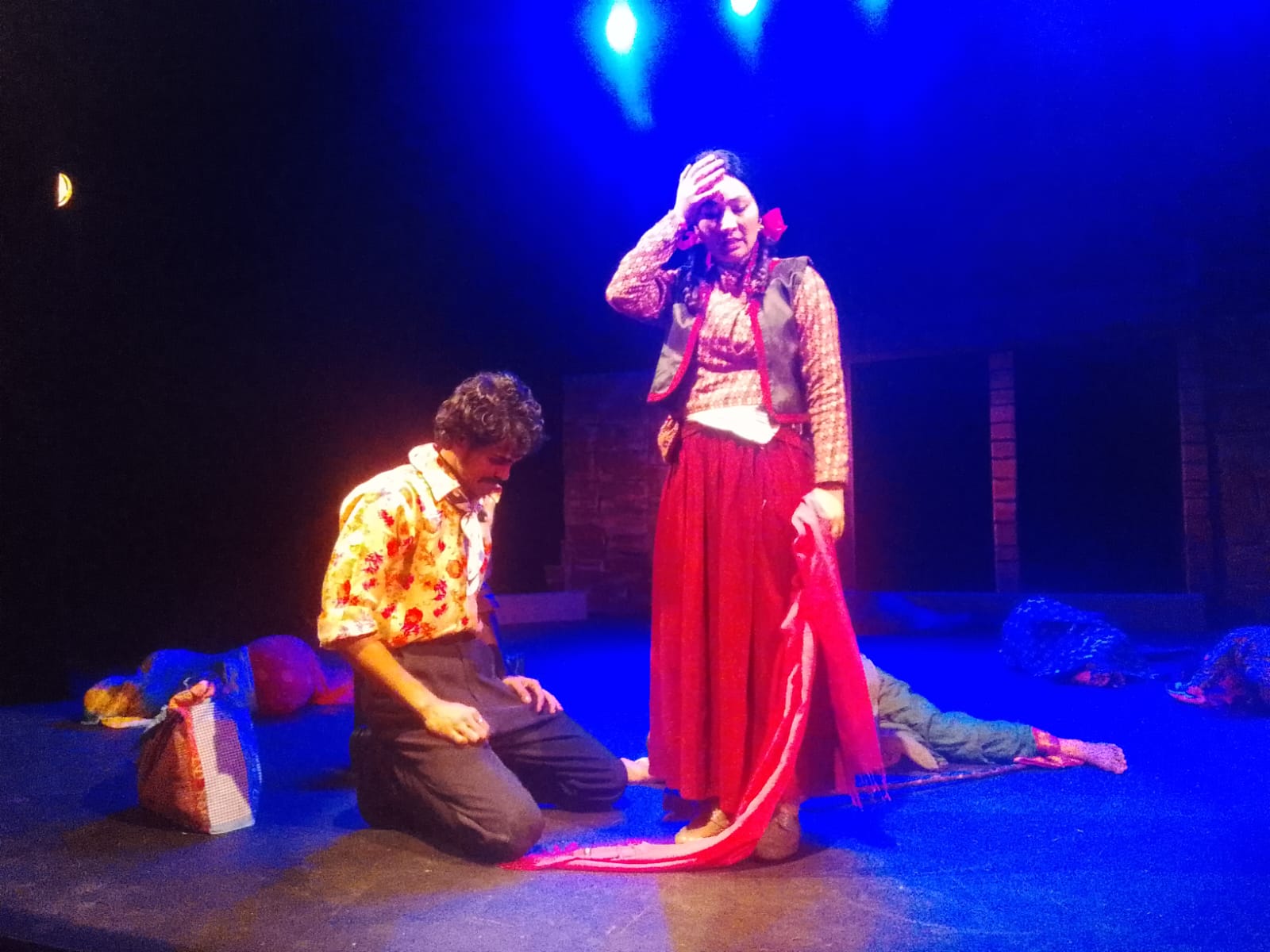 Picture : PRAVEEN PUMA on Sept 27, 20026
19. CONCLUSION
The central significance of Shree Bijjo Bhut (Katha Sudurko…) lies not simply in making Sudurpashchim its subject but in bringing the region onto the stage through language, bodies, music, labour, costume, objects, ritual, memory, and landscape. The involvement of artists with direct relationships to the region gives this process an experiential foundation.
The production’s treatment of migration provides its second major dimension. The dharmashala becomes a space between departure and arrival, encounter and separation, memory and present life. Waiting is not simply an emotional response to absence. It becomes a condition through which characters experience time, change, and altered relationships. After prolonged migration, return does not automatically restore the past.
Incomplete reunion consequently becomes central to the dramatic structure. Characters come close, but lost time cannot simply be recovered. The open ending sustains this distance, although a more defined final physical, spatial, visual, or sonic gesture could give the uncertainty stronger theatrical form.
The representation of women raises a related question. Women carry substantial emotional weight within the narrative, and the act of searching already gives them movement and agency. Their decision-making, resistance, and ability to determine their own futures, however, could be made more explicit. This would allow the migration narrative to be understood not only through women’s waiting but also through their desires and actions.
The SHREE BIJJO BHUT ritual carries meanings of ancestry, protection, power, hope, and cultural continuity. Its dramatic function could extend more clearly beyond the opening. A stronger relationship among ritual, separation, and dramatic consequence could make cultural belief an active component of the play’s meaning-making rather than primarily a marker of regional identity.
The production’s local language, Deuda, Gaura, live music, embodied acting, costume, props, landscape, and collective labour create a recognizable theatrical world. Their significance lies not simply in representing culture but in transforming lived cultural experience into theatrical experience through bodies, sounds, objects, actions, and relationships.
Ultimately, the production raises several fundamental questions: Who has the right to tell a story? Whose language becomes theatrical language? Whose geography receives space on the stage? And whose memories enter the shared memory of Nepali theatre?
SHREE BIJJO BHUT drama does not provide definitive answers to these questions. Its significance lies in bringing them into a performance shaped by the lived cultural realities of Sudurpashchim, migration, absence, love, labour, ritual, and incomplete relationships.
In this sense, waiting is not simply the final emotion of the play. It is part of its theatrical structure: waiting not only for someone to return, but for lives altered by migration to find meaning within a changed present. This is where regional storytelling becomes a performance-centered critical inquiry.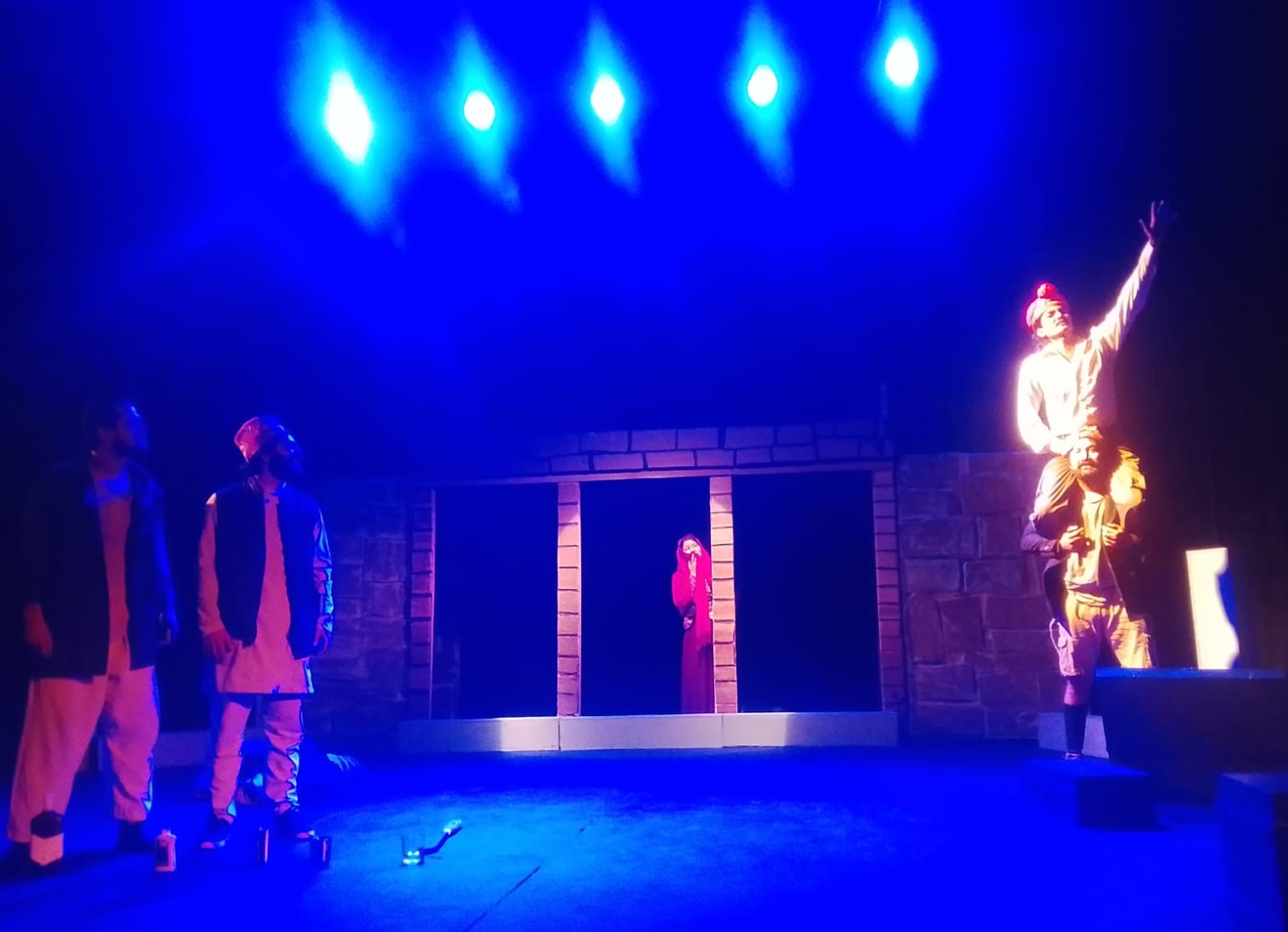 Picture : PRAVEEN PUMA on Sept 27, 20026