Three-Day World Conference of Bhutanese Nepali Writers Concludes in The Hague, Netherlands, with Rs 6 Lakh Prize Announced
The Hague, Netherlands,
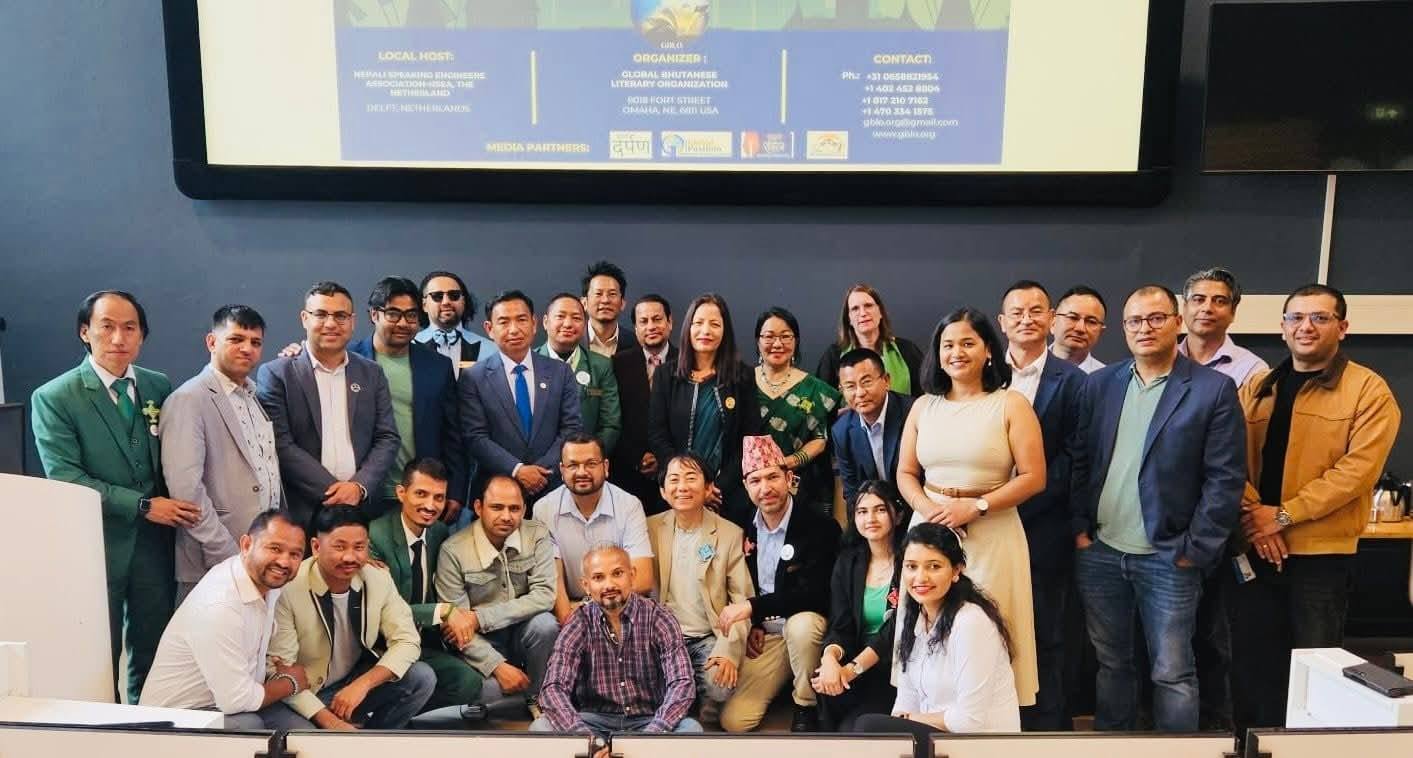
The 6th edition of the Global Bhutanese Literature Organization (GBLO), an international body of Bhutanese Nepali writers, successfully concluded its three-day world conference in The Hague, Netherlands. The conference was held from June 13 to 15, 2025.
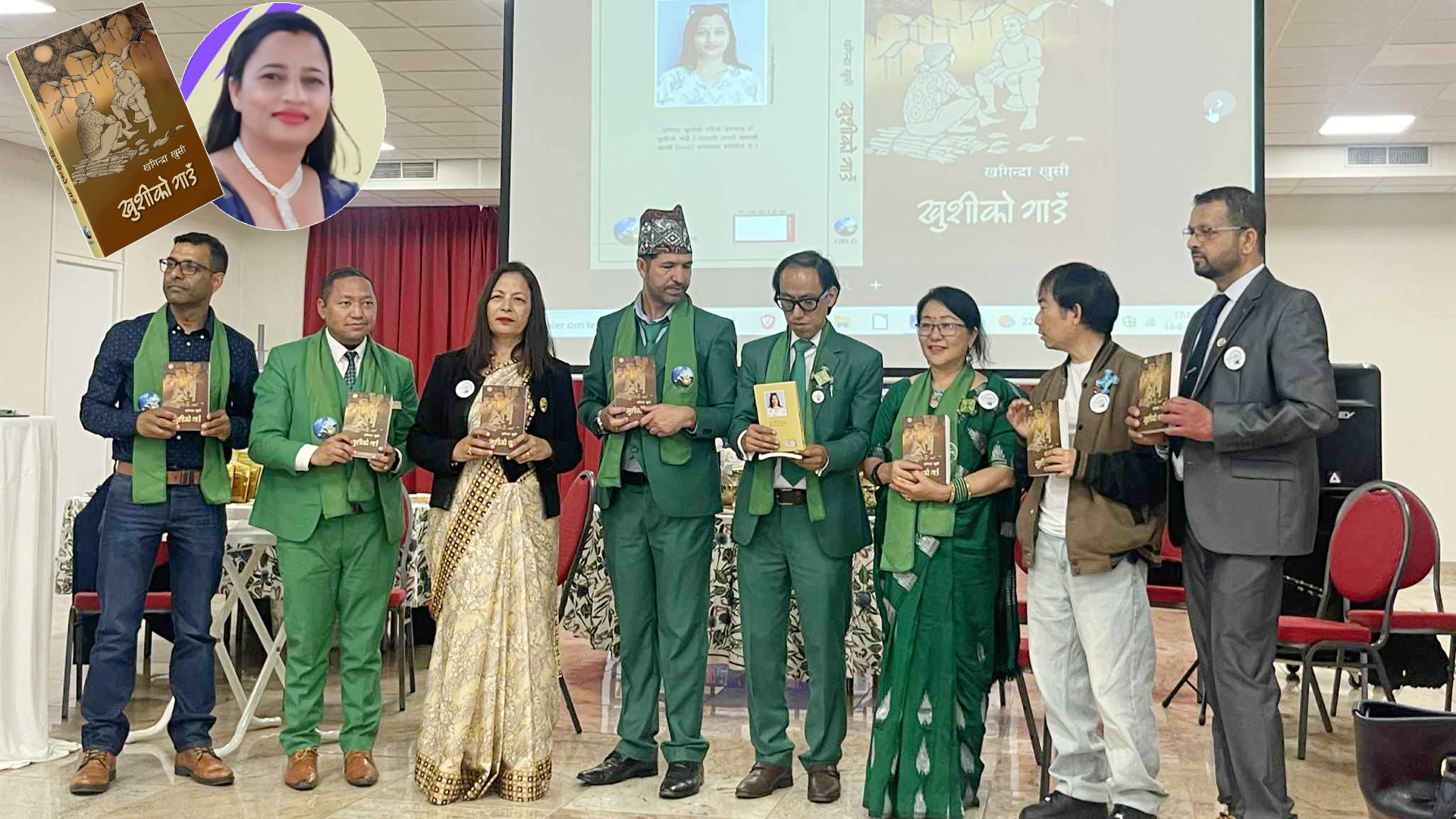
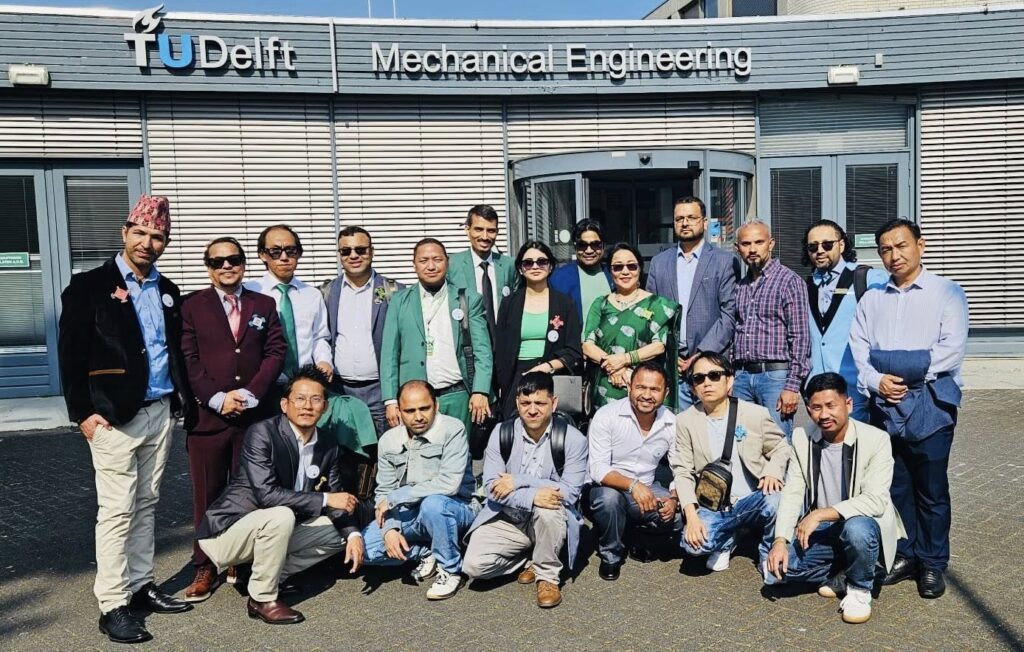
On the first day, several research papers were presented at Delft University. The second day featured a wide-ranging discussion on the “Theory of Acceptance,” introduced by philosopher Denzome Sampang. Other highlights included literary readings, presentation of six papers, honouring of literary figures, book releases, and the announcement of the organization’s new leadership.
A major announcement was the selection of senior writer Bairagi Kainla as the recipient of the Acceptance Siddhi Award, the highest honour in Nepali literature to date. The award includes a cash prize of Rs 6 lakh. Previously, the award was given to renowned Assamese Nepali writer Lil Bahadur Chhetri.
On the third day, under the theme “The Principle of Acceptance for Peace and Stability,” a group of about a dozen literary figures wearing green vests—symbolizing acceptance—held a bicycle rally. The tour began at The Hague University and passed by key landmarks such as the Peace Palace, the International Criminal Court, and the Dutch Parliament.
Participants from 16 countries attended the event, including the United States, United Kingdom, New Zealand, Australia, Norway, Slovenia, Poland, Belgium, Netherlands, Denmark, Bhutan, Nepal, and France.
The new committee for 2025–2027 was also elected, comprising the following members: President: Patalo Antare (USA), Senior Vice President: Gopal Poudel (New Zealand), General Secretary: Susan Majhi (Ohio), Secretary: Lucky Rasi (Kentucky), Treasurer: Shekhar Koirala (Pennsylvania), Co-Treasurer: Abi Neupane (Ohio), Program Manager & Director: Ishwar Dhakal (Ohio), Cultural Coordinator: Sargam Thapaliya (Pennsylvania), Publicity Chief: Bhim Gurung (Nebraska), Members: Khadag Gajmer (Nebraska), Devi Rai (Iowa), Yadu Adhikari (Ohio), Chhatra Dangal (Australia).
Board of Trustees are Denzome Sampang, Jaya Bantawa, Karna Gurung, Pradeep Gurung, Abhash Rikham, and Mamta Moktan – all from Pennsylvania or Nebraska.
The conference opened with a welcome speech by Sabina Shrestha. The chief guest was Her Excellency Sewa Lamsal, Ambassador of Nepal to the Benelux countries. The special guest was Biswasdip Tigela, recently elected Vice President of the International Coordination Council of the Non-Resident Nepali Association (NRNA).
Dr. Narad Pokharel delivered a theoretical presentation on the principle of acceptance. Noted poets and speakers, including Prakash Angdembe, Dilliraj Ammai, Suryaraj Giri, Deepa Rai Pun, Pancham Adhikari, Hari Poudel, human rights activist Ram Karki, former NRNA Netherlands president Shashi Poudel, and current president Thaneshwor Kadel, gave literary readings and commentary.
Cultural performances by local artists, including Birman Shrestha, Sabu Poudel, and Rasmita Parajuli performing Shanti Yoga, added vibrancy to the event.
In an academic presentation, NRNA Vice President Biswasdip Tigela proposed renaming the Nepali language name as Khas-Jumli, and called for recognizing all languages spoken in Nepal as part of a unified Nepaleya Sahitya (Nepali Literature). He supported his proposal with data and scholarly analysis.
According to the 2016 Socio-Language Scientific Survey, 75% of Jumli Nepali speakers commonly use “Nepali Bhasha” in daily conversation. Tigela argued that since the Jumli dialect evolved from the ancient Khas language of the Sinja Valley—now nearing extinction—it should be more accurately called Khas-Jumli.

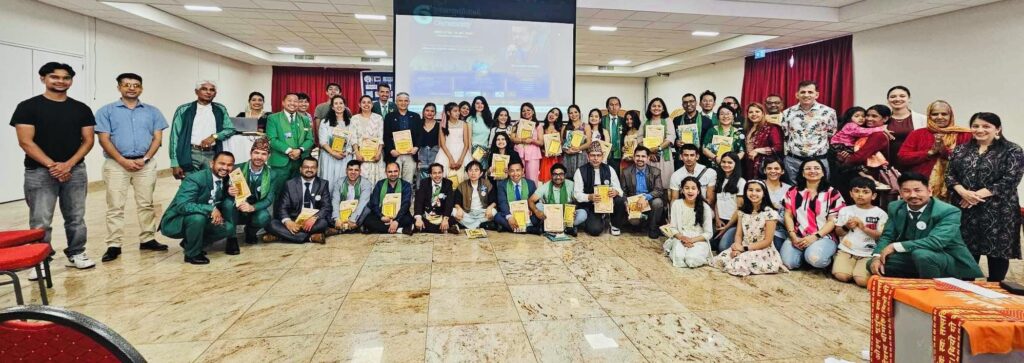
The event concluded with Karna Gurung, president of the organizing committee, expressing gratitude and presenting tokens of appreciation to the attendees. D.P. Sharma Mainali, a lecturer at The Hague and Delft universities, coordinated the program. The sessions were conducted by General Secretary Patalo Antare.
There are about 500 Bhutanese Nepali families living in the Netherlands. Following the conference, around a dozen participating writers travelling on to Belgium, Luxembourg, Germany, Switzerland, France, and the United Kingdom.