THEATRICAL EXPRESSION OF SOCIAL REALITY IN PUSHPARAJ AWASTHI’S LAURO DRAMA-PRAVEEN PUMA
1. INTRODUCTION
Theatre becomes socially meaningful when experiences from everyday life are transformed into something an audience can see, hear, feel, and recognise. Pushparaj Awasthi’s Lauro engages with a familiar but painful reality of contemporary Nepali society: younger people leaving home while their parents and older family members remain behind. Rather than treating migration simply as an economic issue, the drama brings its consequences into the intimate world of family life—ageing, separation, memory, waiting, and the need for human companionship.
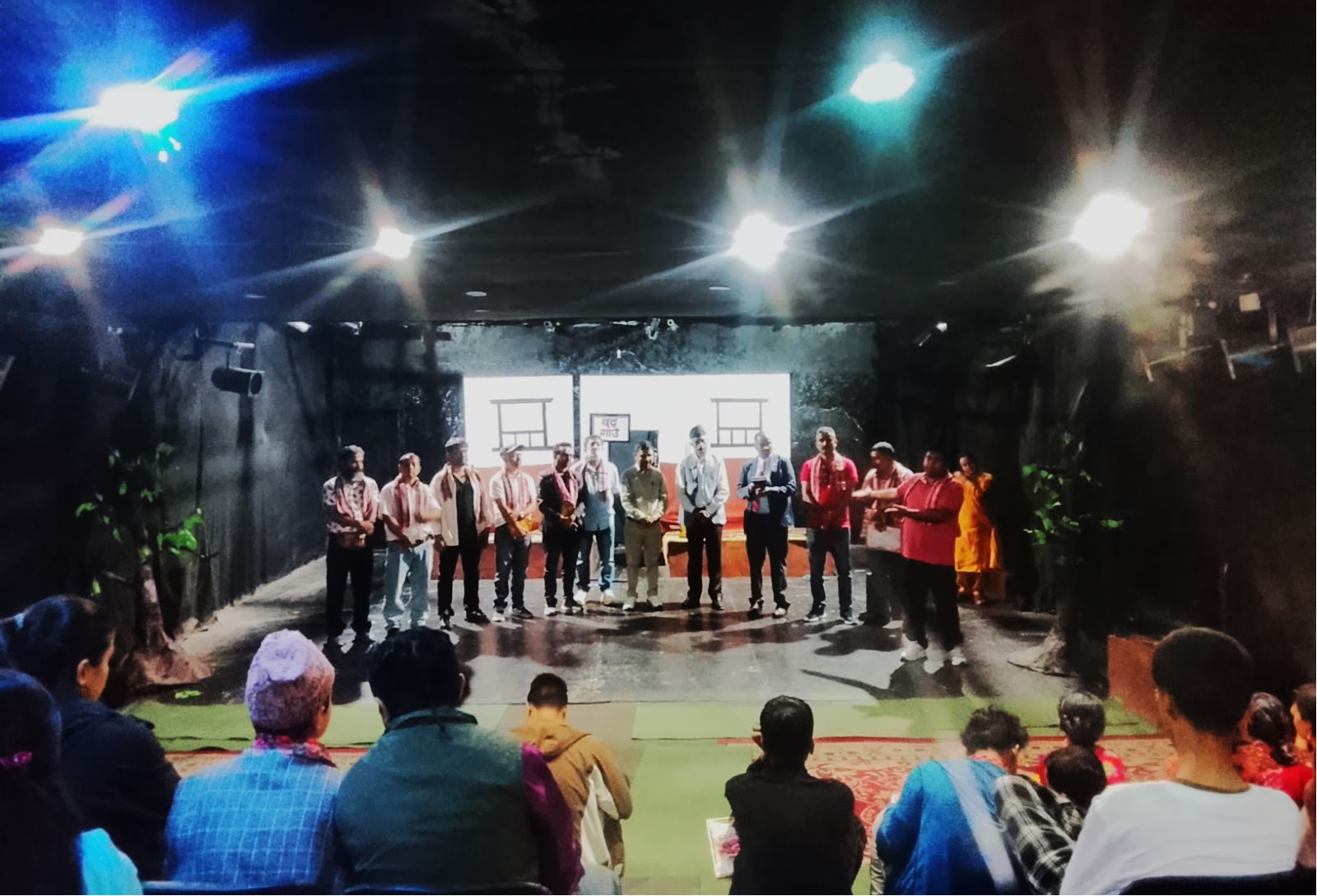
Written and directed by Pushparaj Awasthi and presented by Bright Future Secondary School, Lalitpur–15, Satdobato, the production was staged from September 8 to 12, 2026, at Ek Theatre, Thapagaun, Kathmandu. The drama begins with a happy and prosperous village and gradually reveals a community in which elderly people increasingly occupy the centre of everyday life. This gradual change gives the production its emotional and dramatic direction.
This article adopts a qualitative, practice-based, performance-centred approach grounded in my first-hand observation of the final performance on September 12, 2026. I watched the performance as Chief of the Award-2026 Jury, together with jury members Rambhajan Kamat and Rupesh Mandal. Approximately 150 spectators attended the final performance, which played to a full house.
My analysis considers Lauro not simply as a written drama but as a live theatrical encounter. I examine its dramatic situation, stage space, acting, direction, theatrical objects, visual and aural language, collaborative process, educational dimension, and audience response. My observations as a theatre practitioner provide the basis for interpreting how the production turns a social reality into an experience shared between performers and spectators.
2. DRAMATIC SITUATION:
The drama opens in a village where family and community life appear active, secure, and prosperous. People are present, relationships are visible, and everyday life has a sense of continuity. As the story develops, however, younger people begin to leave home in search of employment and economic opportunity, particularly abroad. The consequences are not presented through statistics or political argument. They appear in ordinary human situations. Parents remain at home while their sons and daughters are elsewhere. Familiar voices become distant. Everyday conversations are replaced by waiting, remembering, and wondering.
This makes the social issue personal. Migration is not shown only as movement from one country to another; it is also experienced as a change within the home itself.The village therefore changes gradually. What begins as a socially active community becomes increasingly shaped by the lives of those who have stayed behind. This transformation establishes the emotional circumstances from which the later theatrical action develops.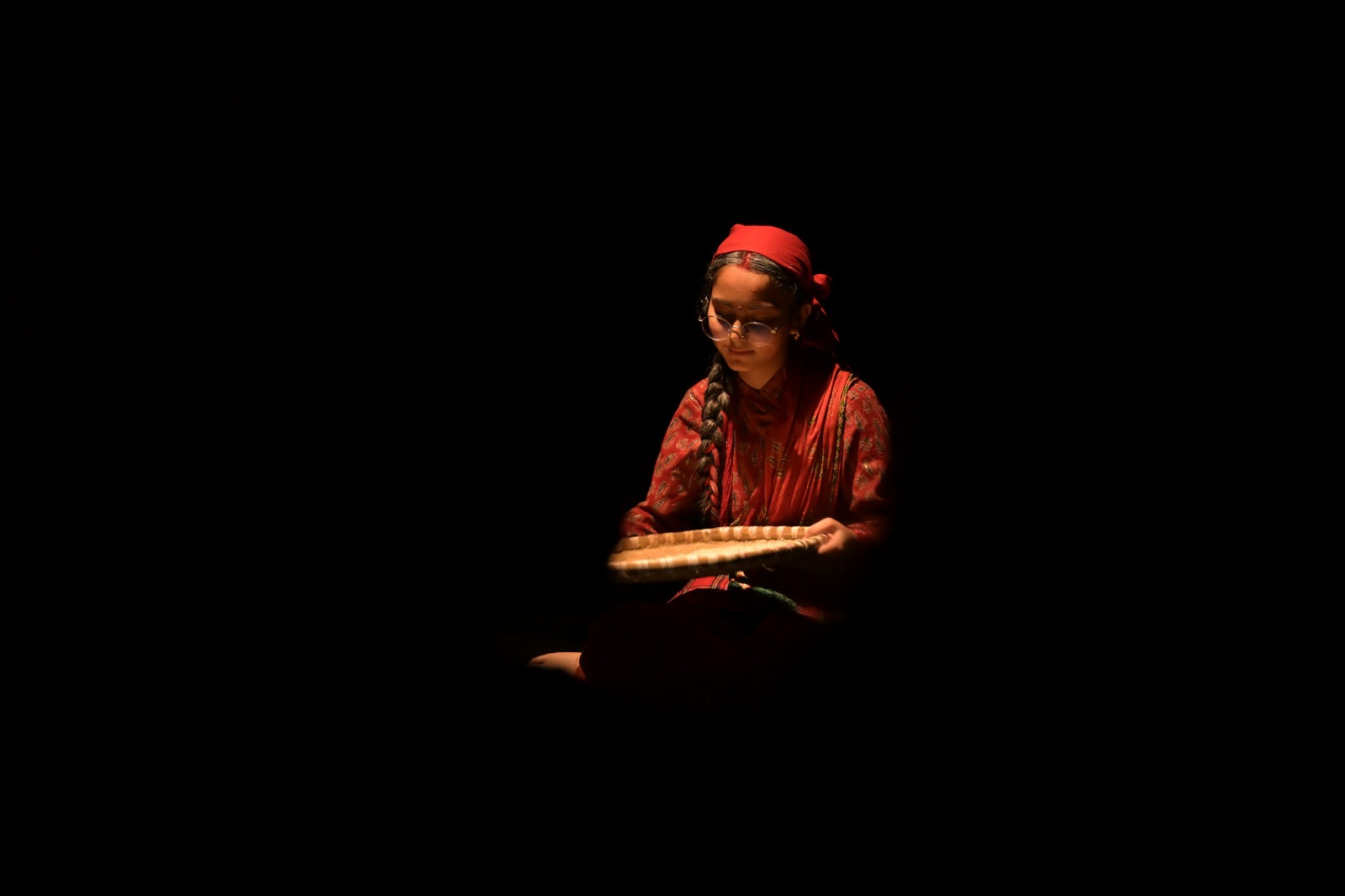
3. DRAMATIC SPACE:
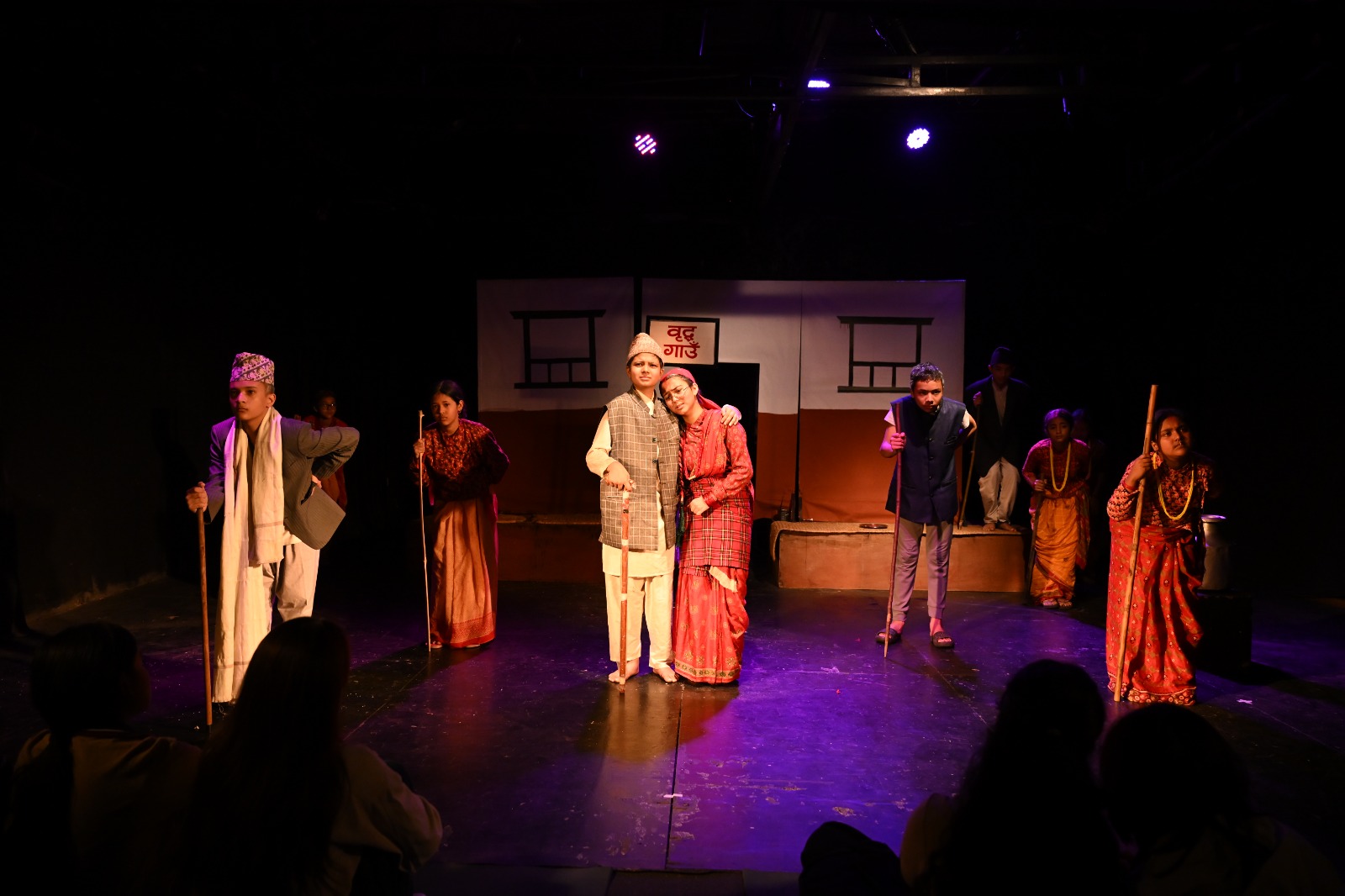
The stage establishes a rural environment through a village house and surrounding trees. At first, the setting conveys familiarity, continuity, and communal belonging. It feels like a place where people live together and where ordinary activities take place. As the performance progresses, however, the same physical space begins to feel different. The house does not disappear, but the people and relationships associated with it change. The space becomes quieter and more closely connected with domestic routine, memory, and waiting.
This is one of the production’s effective theatrical choices. Major scenic changes are not necessary to communicate social change. The audience senses the transformation through the way characters occupy the space, relate to one another, move, sit, wait, and respond.
The home consequently becomes more than a backdrop. It remains a physical place, but its emotional meaning changes as the lives within it change.
4. THEATRICAL SIGN:
The lauro is the production’s principal theatrical object. At first, it is simply a walking stick. Yet when an actor uses it, the entire body changes. Walking becomes slower, balance becomes different, posture changes, and even ordinary gestures acquire another rhythm. For this reason, the lauro becomes part of the actor’s characterisation. It is not merely carried; it becomes part of the character’s physical existence. Its significance becomes deeper because of what it cannot do. A walking stick can help someone stand or walk, but it cannot listen to a lonely person, share a conversation, offer affection, or sit beside someone in moments of sadness.
The new suitcase provides a striking contrast. It suggests travel, departure, foreign employment, economic aspiration, and the possibility of return. Placed within the same dramatic world as the lauro, it creates a simple but powerful visual relationship between those who leave and those who remain.The meaning of these objects emerges naturally from their use on stage. The production does not need to explain their symbolism at length; the audience encounters their meanings through the characters’ actions.
5. ACTING AND THE ELDERLY BODY
The human dimension of Lauro becomes especially immediate through the actors. Shusana Sanjel, Sanrakshan Mishra, and Abhiman Shrestha gave particularly realistic and emotionally grounded performances. During several intense moments, I observed real tears. These moments did not feel like isolated displays of emotion; they grew out of the situations the actors had established. Their acting was effective because emotion was supported by physical detail. Facial expression, gaze, posture, gesture, vocal modulation, pauses, rhythm, and restraint worked together to create believable characters.
The representation of ageing was particularly visible in the body. Slower movement, changes in balance, restricted physical action, altered walking rhythm, facial expression, and vocal delivery created a convincing physical presence. As a theatre practitioner, I found this aspect particularly significant. The actors did not simply tell the audience that their characters were lonely, vulnerable, or emotionally strained. Those conditions could be seen in the way they moved, looked, spoke, and remained silent. The wider cast also helped create the relationships and social environment within which these central performances became meaningful.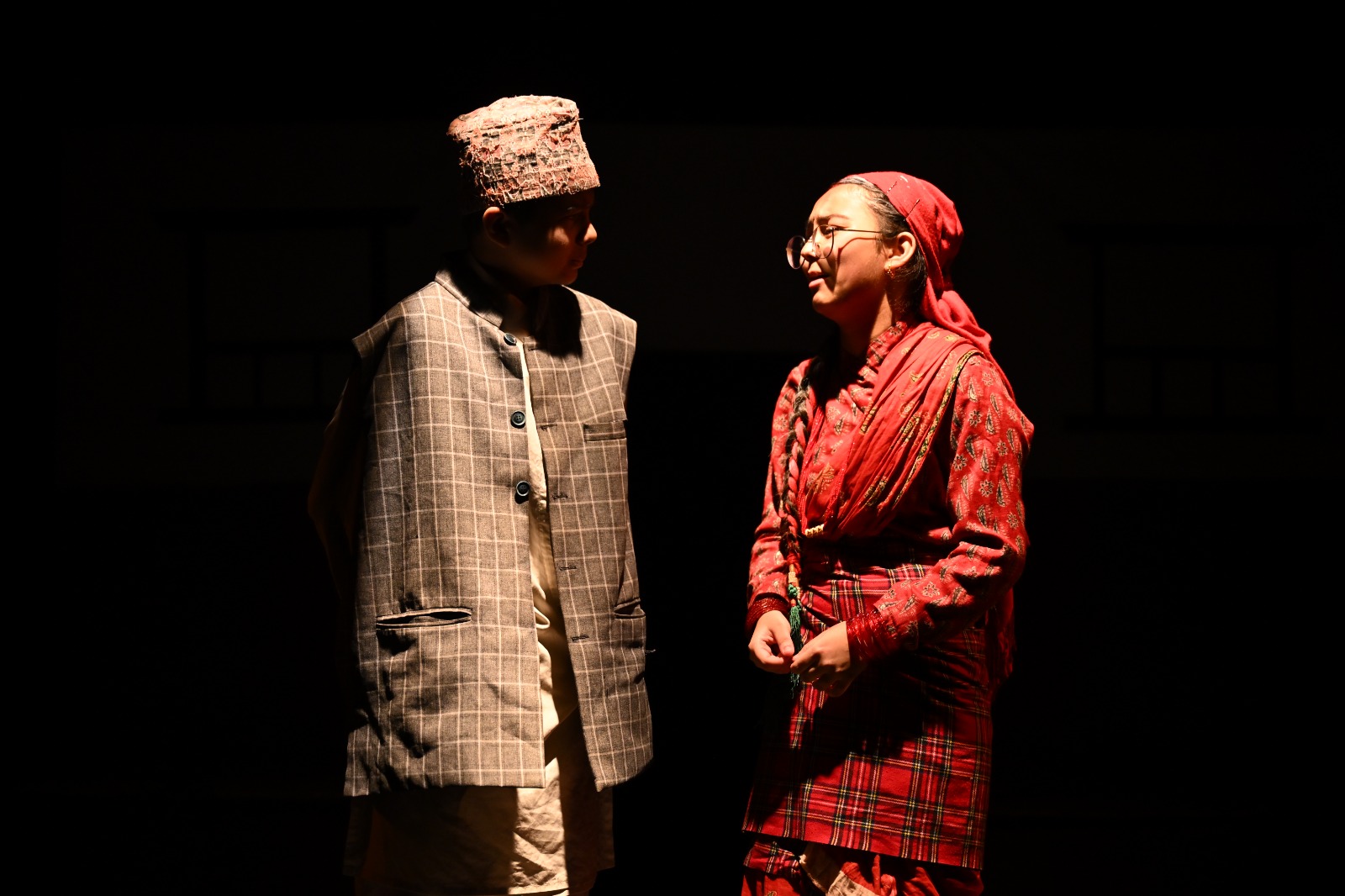
6. DRAMATIC ACTION :
One of the most human aspects of Lauro is its treatment of waiting. A person who waits may appear to be doing very little, yet waiting can occupy an enormous part of life. On stage, waiting becomes visible through looking, listening, remembering, expecting, and talking about people who are not there. Physical stillness therefore does not mean dramatic inactivity.
Pauses and silence are particularly important. They slow the rhythm of the performance and give the audience time to remain with the characters rather than immediately moving to the next event. In this way, the production turns waiting into an action. The audience does not simply hear that someone is waiting; it experiences something of what waiting feels like.
7. DRAMATIC ORGANISATION AND DIRECTION
Awasthi’s direction develops the drama through relationships, dialogue, movement, pauses, spatial arrangements, and changes in emotional intensity. The production generally avoids explaining every situation through dialogue. Instead, meaning often emerges through what the characters do. A pause, a change of position, an interruption, or a change in behaviour can reveal something that does not need to be spoken. The opening has a relatively active social rhythm, while later situations become more restrained. This gradual change is created through performance rather than through narration.
At the same time, Awasthi’s directorial practice invites further critical reflection. As a senior theatre practitioner with experience teaching acting in a government institution and in established schools, he brings considerable professional and pedagogical experience to the production. Precisely because of this background, certain aspects of the direction could be reconsidered and further refined, particularly in actor guidance, pacing, emotional transitions, and the integration of theatrical elements.
This observation is offered as a constructive professional assessment rather than as a dismissal of the production. The experience expected of a senior theatre practitioner naturally creates a higher expectation for precision in directing. From my perspective as a theatre practitioner and as a member of the final-performance jury, some directorial choices could have been more carefully developed so that the dramatic intention and its stage realisation were more consistently aligned.
The direction is most effective when theatrical action is allowed to communicate for itself. The audience is given space to observe relationships and draw emotional conclusions rather than being told exactly what to feel. Further refinement of this quality could make the production’s social and emotional concerns even more compelling.
8. VISUAL AND AURAL LANGUAGE
The visual world of Lauro is grounded in a recognisable rural environment. The village house and trees establish the principal setting, while elements such as a coffin containing a dead body, a jungle with goats, scenes involving the playing of stone pieces, and a suitcase create particular dramatic situations. Costume also helps establish character and generation. Children appear in school uniforms, elderly men in daura-suruwal, elderly women in sari-chola, and young men in shirts and trousers.
Lighting uses both flat and spot lighting, helping to direct attention and shape the atmosphere of individual scenes. The soundscape includes folk music, Tihar Bhailini music, thunderstorm effects, and sad or melancholic music. Silence is equally important. In some moments, the absence of sound allows a face, a gesture, a pause, or a still body to communicate what words cannot. The production therefore uses visual and aural elements not simply to decorate the stage but to support the emotional and dramatic rhythm of the performance.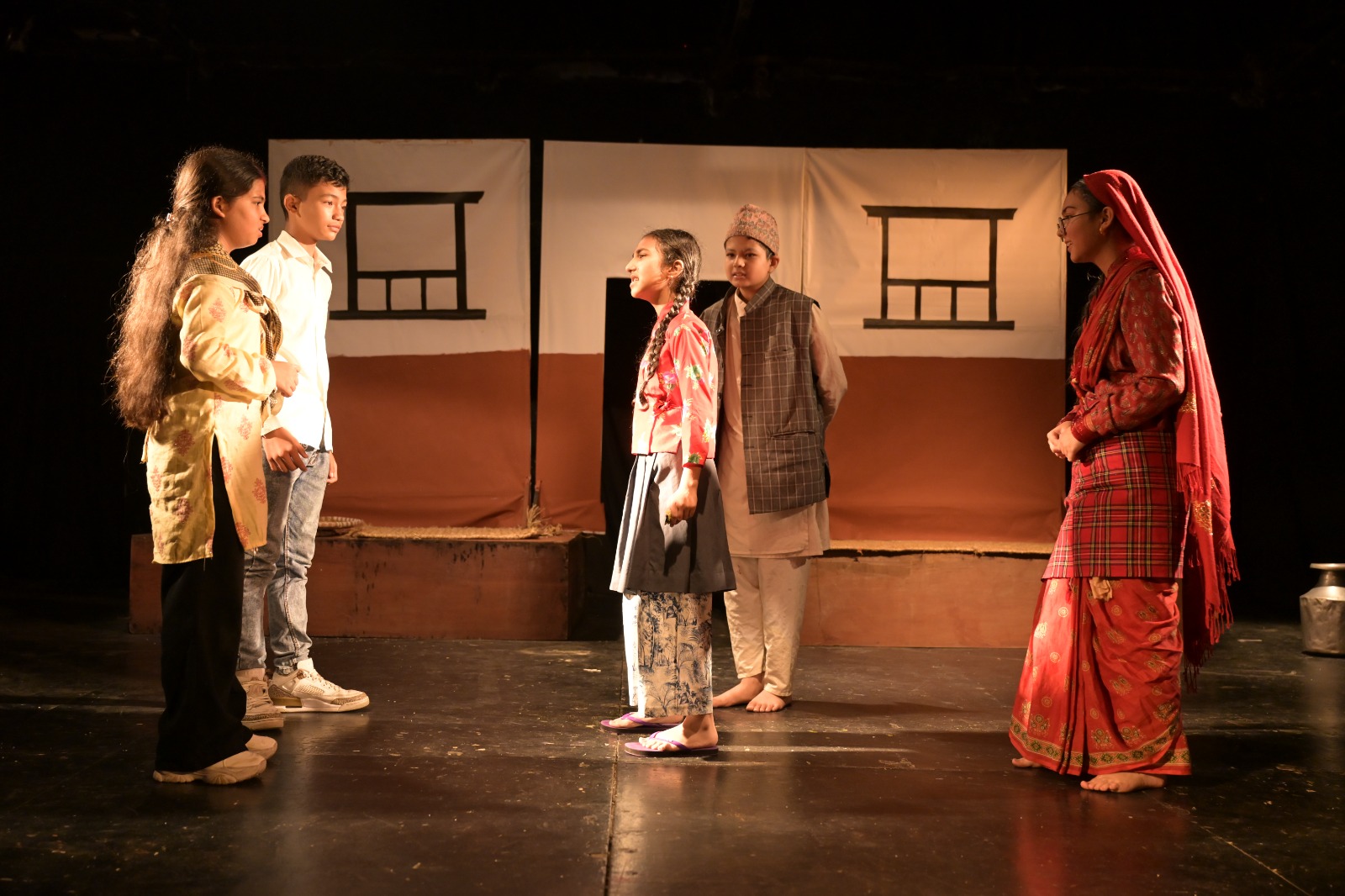
9. COLLECTIVE THEATRICAL PRODUCTION
The performance also reminded me that theatre is never the work of actors alone. Prasij Ghimire, Stage Manager; Reshmi Rai, Props Manager; Prakash Dahal, Lighting Designer; and Rubin Sunar, Assistant Director, contributed to the organisation and technical execution of the production. Each role carries a different responsibility. Props establish the material world, lighting shapes what the audience sees, stage management keeps the performance coordinated, and assistant direction helps connect different aspects of the production.
The overall stage and performance management were well organised. This allowed the actors and technical elements to work together without disrupting the flow of the performance. From a practice-based perspective, such coordination is important because the performance seen by the audience is the final result of many people working, often invisibly, behind the stage.
10. THEATRE PRACTICAL EDUCATION
As a school production, Lauro also performs how theatre can become a form of learning through doing. Students participated in character development, rehearsal, movement and voice work, technical preparation, ensemble building, stage management, and live performance. The approximately five-day preparation and rehearsal period required concentration, discipline, cooperation, and responsibility. Students had to learn not only their individual roles but also how their work depended on the work of others.
The subject itself gave them an opportunity to engage with ageing, family relationships, economic aspiration, and social change through performance. They encountered these issues through bodies, voices, relationships, rehearsal, and imagination rather than only through classroom discussion. Theatre therefore became both an artistic practice and an educational experience.
11. AUDIENCE RECEPTION
Approximately 150 spectators attended the final performance, and the theatre was full. During emotionally intense scenes, I observed visible responses from audience members, including tears. For me, these responses were significant because they suggested that the situations on stage were not being experienced as distant or purely fictional. People recognised something of their own social world in what they were watching.
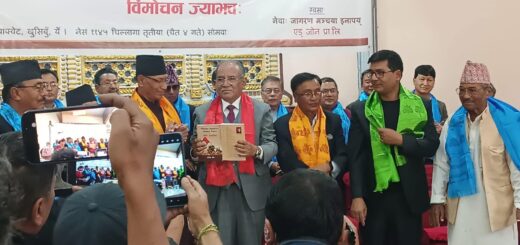
The response also performed the particular nature of live theatre. The performance existed not only in the actions of the actors but in the emotional exchange that developed between stage and auditorium. The final programme brought together figures from Nepal’s cultural and theatrical spheres. Prabhakar Dev Sharma, former Acting Managing Director of Cultural Corporation, Government of Nepal, attended as Chief Guest, with Kishor Adhikari as Chairman and Ram Raman Humagain as announcer. Other guests included Rajendra Rimal, Puru Lamsal, Deepak Prasad Acharya, Sukreet Nepal, and Basu Dev Koirala.
12. WIDER THEATRE COMMUNITY
Although Lauro was produced in a school environment, its presentation was connected with the wider theatre community. The presence and engagement of practitioners such as Reena Rimal, Sagar Karki, Gobinda Raj Khadka, Purna Rai, and Dhiren Karki created an important connection between educational theatre and broader theatrical practice.
For young performers, such contact can be valuable. It allows them to see that the work they are doing at school can connect with a larger theatrical culture and with practitioners who have different experiences and working methods. In this sense, the production extends beyond the classroom. It becomes a meeting point between students, teachers, practitioners, audiences, and the wider theatre community.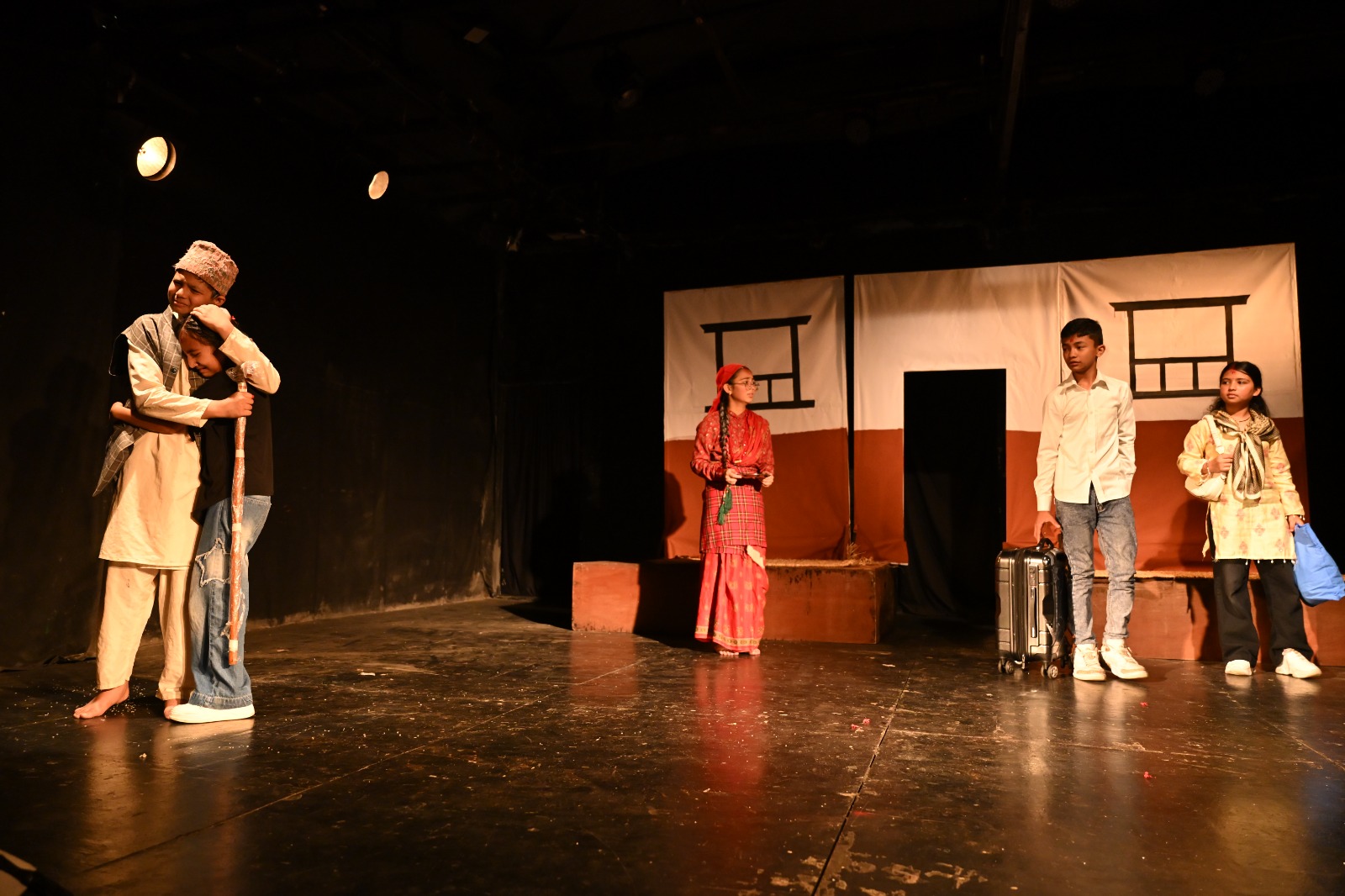
13. FINAL PERFORMANCE, JURY RECOGNITION, AND THEATRICAL PROCESS
I observed the final performance as Chief of the Award-2026 Jury, alongside Rambhajan Kamat and Rupesh Mandal. This position gave me an opportunity to watch the production both as a theatre practitioner and as an evaluator. The recognitions covered different forms of contribution. Reshmi Rai received the Best Long Participation Award-2026. Drishana Bohora, Rasil Basnet, Sushant Ghimire, and Shreya Sunuwar received Appreciation Awards-2026. Utprena Pandit received the Director’s Choice Award-2026, Angshu Basnet the Best Cooperative Award-2026, Aarogya Shrestha the Best Public Choice Award-2026, and Aagrata Adhikari the Theatre Spirit Award-2026.
The acting awards went to Rishona Tasneem, Best Emerging Female Actor; Abhimanyu Bhatta, Best Emerging Male Actor; Remoon Dahal, Best Supporting Female Actor; Abhiman Shrestha, Best Supporting Male Actor; Sanrakshan Mishra, Best Male Actor; and Shusana Sanjel, Best Female Actor. These recognitions record different kinds of contribution to the production. They also reinforce an important reality of theatre: what an audience finally sees on stage is built through many individual efforts, sustained rehearsal, cooperation, and commitment.
14. CONCLUSION:
Pushparaj Awasthi’s Lauro succeeds in turning a familiar social reality into a human theatrical experience. Its strength lies in allowing the audience to encounter social change through people rather than through abstract explanation. The production brings together acting, space, movement, objects, sound, silence, and audience response to create a world that feels recognisable. The actors give emotional and physical form to their characters, while the direction and production team shape those performances into a coherent theatrical event.
The drama ultimately asks a simple but difficult question: What does an ageing parent need most—a walking stick, financial security, or the presence of a loved one? A walking stick can help someone walk. Money can make life materially easier. But neither can replace a conversation, a caring hand, a familiar voice, or someone simply sitting beside an ageing parent. This is where the lauro becomes more than a prop. It quietly reminds us of the difference between supporting a body and accompanying a person.
As a theatre practitioner who witnessed the performance directly, I found the production most powerful when it allowed this human question to emerge naturally from the lives of its characters. The drama does not need to provide a simple answer. It leaves the audience with a feeling that is more difficult—and perhaps more important—to dismiss.The walking stick may help a person move forward, but Lauro reminds us that no one should have to make that journey alone.